Got a Tax Form From Venmo or PayPal for Selling Old Stuff?
Sold your old textbooks or furniture through a payment app and got a tax form? Learn general IRS basics on personal items, side gigs, and records to keep.
“Nearly re-enrolled in English class while reading a lease.”
Theology · Scripture Cards
Open a scripture card
Already read and shared by 315 people.
 Surely I Will Be with You
Judges 6:16
Yahweh said to him, “Surely I will be with you, and you shall strike the Midianites as one man.”
Read this card
 I Know That My Redeemer Lives
Job 19:25
But as for me, I know that my Redeemer lives. In the end, he will stand upon the earth.
Read this card
 Listen to Him
Matthew 17:5
While he was still speaking, behold, a bright cloud overshadowed them. Behold, a voice came out of the cloud, saying, “This is my beloved…
Read this card
 He Revealed His Glory
John 2:11
This beginning of his signs Jesus did in Cana of Galilee, and revealed his glory; and his disciples believed in him.
Read this card
 In the Name of the Lord
1 Samuel 17:45, 47
Then David said to the Philistine, “You come to me with a sword, with a spear, and with a javelin; but I come to you in the name of Yahweh…
Read this card
 The Kingdom Belongs to Such as These
Mark 10:14, 16
But when Jesus saw it, he was moved with indignation and said to them, “Allow the little children to come to me! Don’t forbid them, for…
Read this card
 Salvation Is of the Lord
Jonah 2:6, 9
I went down to the bottoms of the mountains. The earth barred me in forever; yet you have brought my life up from the pit, Yahweh my God. ……
Read this card
 Today a Savior Is Born
Luke 2:10-11
The angel said to them, “Don’t be afraid, for behold, I bring you good news of great joy which will be to all the people. For there is born…
Read this card
Key Takeaways
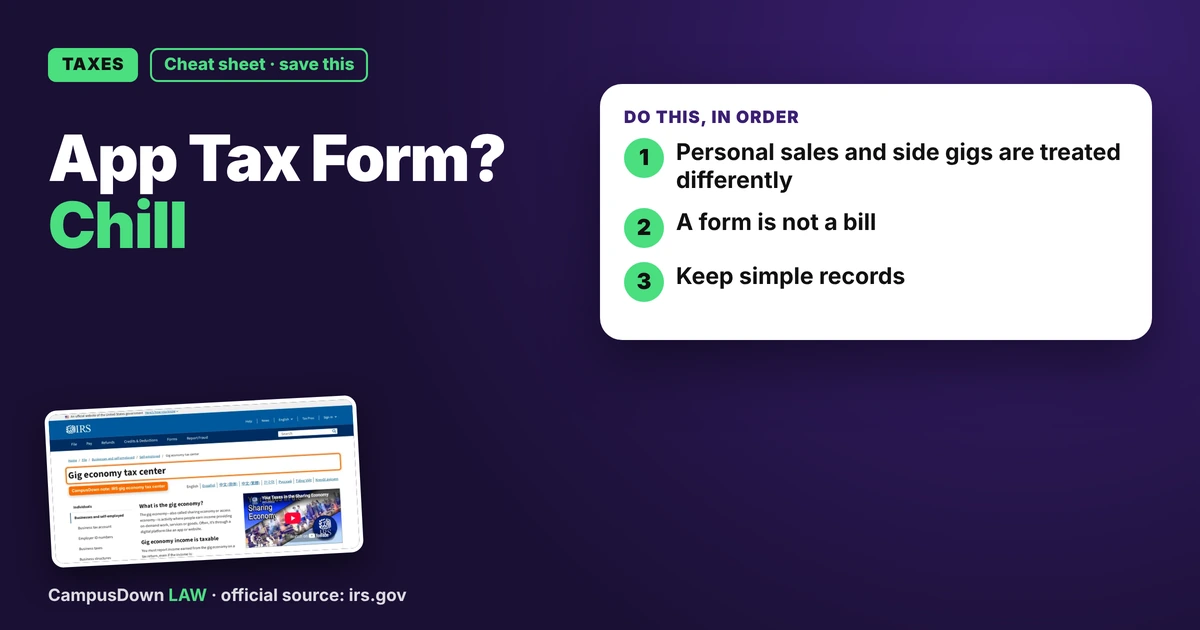
- Personal sales and side gigs are treated differently.
- A form is not a bill.
- Keep simple records.
General information, not legal advice. Rules vary by state and can change; check the official sources linked in this guide.
You sold your old mini fridge, a textbook, and a lamp you never liked. Now you hear payment apps might send tax forms. If you're Googling do i have to pay taxes on venmo payments from selling old stuff, let's sort the scary stuff from the normal stuff.
Not legal advice. I'm a student who sells things to fund groceries, not a tax pro. Tax rules change, so check the IRS site for this year.
Personal items vs. business income
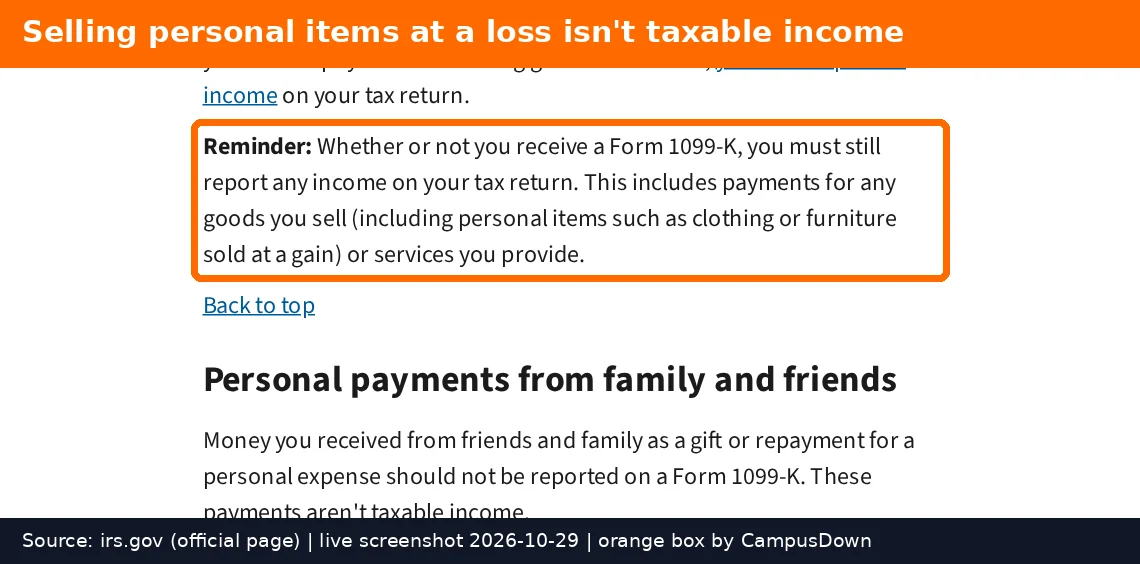
In general, the IRS treats selling your own used stuff differently from running a side business. If you sell personal items for less than you paid, there's often no taxable gain. If you buy things to flip for profit or offer services, that's usually income. The IRS gig economy tax center explains the basics for side gigs.
Understanding what counts as income ties into ideas like marginal and effective tax rates, which explain how much tax actually applies at different income levels.
A form isn't a tax bill
Payment apps may send forms that report payments for goods and services. Getting a form doesn't automatically mean you owe tax. It means the IRS sees the payments, so you should be able to explain them.
Keep simple records
- What you sold and roughly what you originally paid.
- Screenshots of listings and payment notes.
- Receipts for anything you flipped.
When it's really a side hustle
If you do deliveries, tutoring, or reselling, track your income and expenses. Gig workers are often independent contractors, explained on the independent contractor vs. employee wiki page. You may owe self-employment tax, and the IRS site walks through it.
Free filing help exists for many students. Your school might host free tax prep events too.
Watch for tax scams
Scammers love tax season. The IRS generally doesn't start contact by text or social media. If something feels off, go straight to IRS.gov. Protecting your data connects to privacy rights in the U.S..
Legal stuff is easier with a friend. Send this to someone who could use it.
Pick an app — it just sends the link, nothing else.
Frequently Asked Questions
Do I owe tax on selling my used stuff?
Often not if you sell for less than you paid, but rules vary. Check IRS.gov. Not legal advice.
Why did a payment app send me a tax form?
Apps may report goods and services payments. A form isn't a bill.
What if friends paid me for goods by mistake?
Keep records showing it was a reimbursement.
Where can I get free tax help?
IRS free filing options and campus tax events.