My First Apartment Comes With a Surprise Utility Deposit. Why?
Electric or gas company asking for a deposit because you have no credit history? A student's plain guide to why it happens, waivers, refunds, and complaints.
“Nearly re-enrolled in English class while reading a lease.”
Theology · Scripture Cards
Open a scripture card
Already read and shared by 315 people.
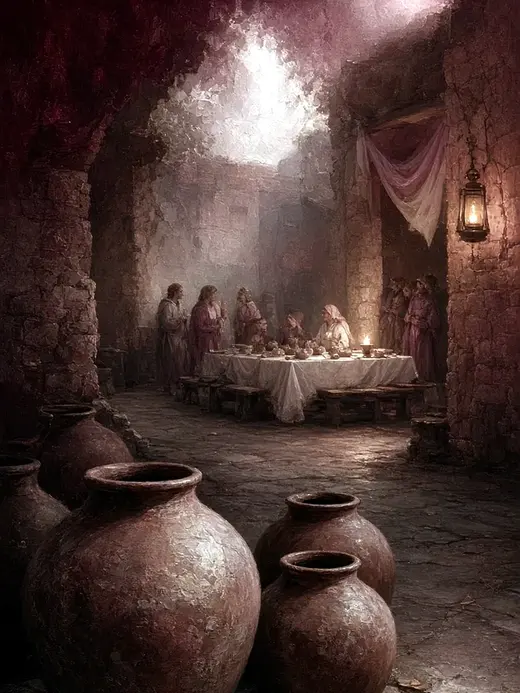 He Revealed His Glory
John 2:11
This beginning of his signs Jesus did in Cana of Galilee, and revealed his glory; and his disciples believed in him.
Read this card
 Bread from Heaven
Exodus 16:4
Then Yahweh said to Moses, “Behold, I will rain bread from the sky for you, and the people shall go out and gather a day’s portion every…
Read this card
 While He Was Still a Long Way Off
Luke 15:20, 22
“He arose and came to his father. But while he was still far off, his father saw him and was moved with compassion, and ran, fell on his…
Read this card
 I Am with You Always
Matthew 28:20
teaching them to observe all things that I commanded you. Behold, I am with you always, even to the end of the age.” Amen.
Read this card
 The Jar Was Not Empty
1 Kings 17:14, 16
For Yahweh, the God of Israel, says, ‘The jar of meal will not run out, and the jar of oil will not fail, until the day that Yahweh sends…
Read this card
 Water from the Rock
Exodus 17:6
Behold, I will stand before you there on the rock in Horeb. You shall strike the rock, and water will come out of it, that the people may…
Read this card
 Surely I Will Be with You
Judges 6:16
Yahweh said to him, “Surely I will be with you, and you shall strike the Midianites as one man.”
Read this card
 I Am with You
Genesis 28:15
Behold, I am with you, and will keep you, wherever you go, and will bring you again into this land. For I will not leave you until I have…
Read this card
Key Takeaways
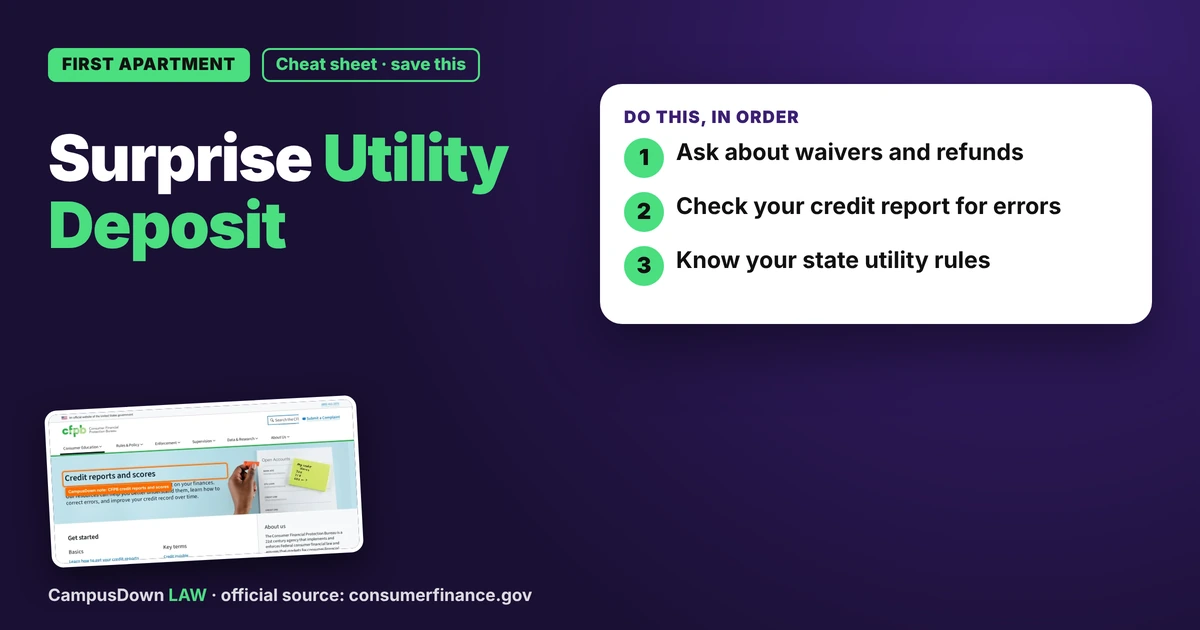
- Ask about waivers and refunds.
- Check your credit report for errors.
- Know your state utility rules.
General information, not legal advice. Rules vary by state and can change; check the official sources linked in this guide.
Signed my first lease. Bought a used couch. Felt like a grown-up for about ten minutes, until the electric company told me I needed to pay a deposit before turning on my power. If you're also wondering why does the electric company want a deposit for my first apartment, I've got the confused-but-curious notes for you.
Reminder: I'm a broke student with internet access, not a utility lawyer. Utility rules are usually set by state regulators and vary a lot, so check your state and your provider.
Why they ask
Utilities often check credit or past payment history before starting service. When you're young with a thin credit file, they don't know if you'll pay, so some ask for a deposit as a safety net. It's not personal, it's math. The wiki on credit scores explains how a short history can look risky to lenders and companies.
How to maybe avoid it
Ask the utility directly:
- Is there a way to waive the deposit?
- Can a letter of good payment history from a past utility count?
- Would a cosigner or guarantor work?
- Is there a payment plan for the deposit?
- Do you offer assistance programs for low-income customers?
Check your credit report
Since credit plays a role, check your report for errors. The CFPB's credit reports and scores page explains how to get your reports and dispute mistakes. Fixing a wrong entry might change what the utility sees later.
Know your state rules
Your state public utility commission usually regulates how deposits work, like limits or refund timelines. Search for your state's commission and read their consumer page. If the utility isn't following the rules, you can file a complaint with that commission. That whole setup is a branch of consumer protection law, which is there so a monopoly-style provider can't just make up its own rules.
Budget tips for broke renters
- Ask the landlord which utilities are included before signing.
- Split utilities fairly with roommates in writing.
- Set autopay reminders to build good payment history.
- Use energy-saving habits to keep bills small.
Being frugal with energy also keeps my place cozy without frying my wallet. The concept of mental accounting helped me treat the deposit as "money parked" instead of money lost.
Someday I want a cozy place where I can cook dinner for someone special without worrying about the power bill. For now, I'm just happy the lights are on.
Legal stuff is easier with a friend. Send this to someone who could use it.
Pick an app — it just sends the link, nothing else.
Frequently Asked Questions
Why do utilities want a deposit?
They may ask for one if you have little or no credit or payment history.
Can I get it waived?
Sometimes. Ask about payment history letters, cosigners, or programs.
Will I get it back?
Many utilities refund deposits after on-time payments. Ask about the timeline.
Where can I complain?
Your state public utility commission handles many utility complaints.