Should My Parents Cosign My Apartment Lease? The Real Risks
Thinking about having your parents cosign your apartment lease? Learn what a guarantor usually agrees to, the risks for them, and what to ask before signing.
“Nearly re-enrolled in English class while reading a lease.”
Theology · Scripture Cards
Open a scripture card
Already read and shared by 315 people.
 Unto Us a Child Is Born
Isaiah 9:6
For a child is born to us. A son is given to us; and the government will be on his shoulders. His name will be called Wonderful Counselor…
Read this card
 Listen to Him
Matthew 17:5
While he was still speaking, behold, a bright cloud overshadowed them. Behold, a voice came out of the cloud, saying, “This is my beloved…
Read this card
 Today a Savior Is Born
Luke 2:10-11
The angel said to them, “Don’t be afraid, for behold, I bring you good news of great joy which will be to all the people. For there is born…
Read this card
 I AM WHO I AM
Exodus 3:14
God said to Moses, “I AM WHO I AM,” and he said, “You shall tell the children of Israel this: ‘I AM has sent me to you.’ ”
Read this card
 I Know That My Redeemer Lives
Job 19:25
But as for me, I know that my Redeemer lives. In the end, he will stand upon the earth.
Read this card
 His Flesh Was Restored
2 Kings 5:14
Then he went down and dipped himself seven times in the Jordan, according to the saying of the man of God; and his flesh was restored like…
Read this card
 Let There Be Light
Genesis 1:3-4
God said, “Let there be light,” and there was light. God saw the light, and saw that it was good. God divided the light from the darkness.
Read this card
 Take Heart, It Is I
Matthew 14:27, 31
But immediately Jesus spoke to them, saying, “Cheer up! It is I! Don’t be afraid.” … Immediately Jesus stretched out his hand, took hold of…
Read this card
Key Takeaways
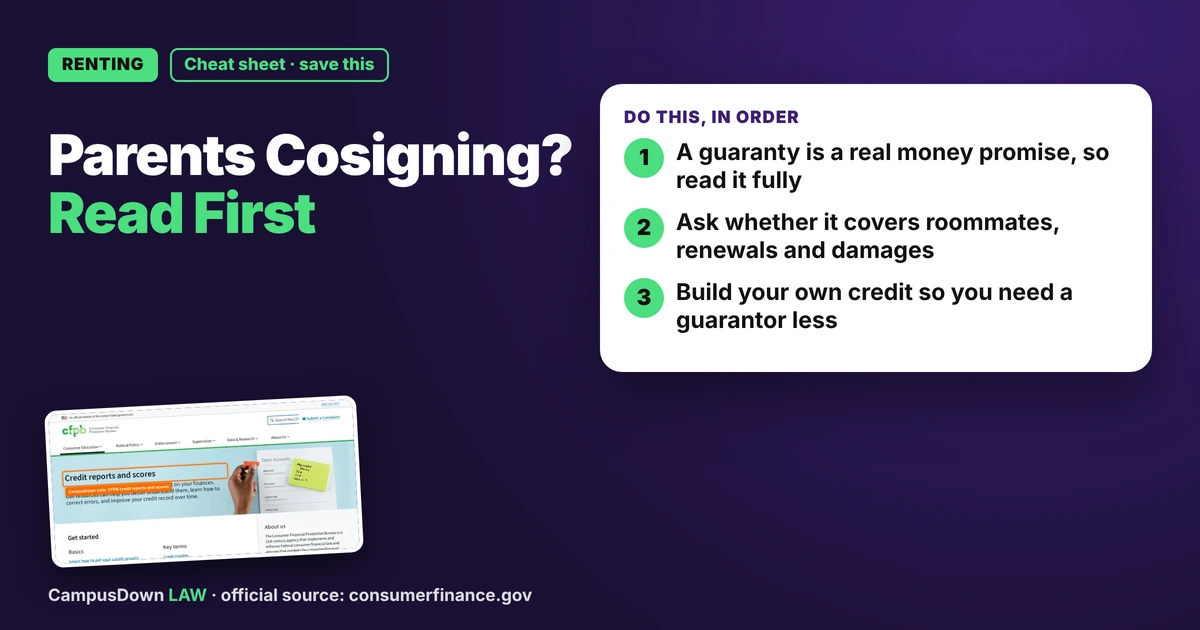
- A guaranty is a real money promise, so read it fully.
- Ask whether it covers roommates, renewals and damages.
- Build your own credit so you need a guarantor less.
General information, not legal advice. Rules vary by state and can change; check the official sources linked in this guide.
First apartment application, and the leasing office hits you with: "No credit history? You'll need a guarantor." Suddenly you're calling your mom like you're 12 again. If you're wondering should my parents cosign my apartment lease, let's talk about what that actually means for them.
Usual note: I'm a college student, not a lawyer. General info, not legal advice, and lease rules differ by state.
Cosigner vs. guarantor, kind of the same energy
Landlords use both words. Often a guarantor signs a separate guaranty saying they'll pay if the tenant doesn't. The exact promise is in that document. Some guaranties cover only rent. Some cover damage, fees and even renewals. Your parents should read it, not just sign where the sticky arrow points.
The risks for your parents
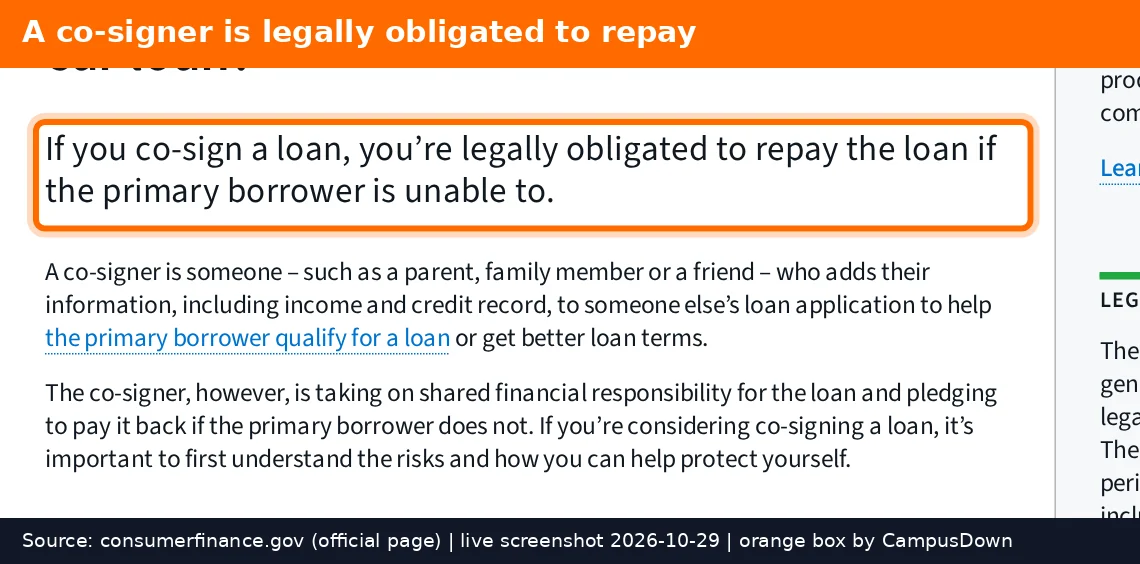
- They may owe money if you don't pay.* That's the whole point of the guaranty.
- It might touch their credit.* If unpaid amounts go to collections, that can show up on credit reports. The CFPB explains how credit reports and scores work if they want to understand the stakes.
- Roommates can complicate it.* On some joint leases, a guarantor might be on the hook for the whole unit, not just your room. Ask.
Questions to ask before signing
- Does the guaranty cover only my share or the whole lease?
- Does it continue if the lease renews?
- Does it cover damages and fees, or only rent?
- Can it be limited to a dollar amount or time period?
Asking feels awkward, but this is classic negotiation theory. Landlords sometimes adjust terms when asked politely, especially near campus where they rent to students constantly.
Alternatives if your parents can't
Some landlords accept a bigger deposit, proof of savings or income, or a roommate with stronger credit. Some students use third-party guarantor services, which charge fees, so read their terms closely. Building your own credit score over time helps you skip this whole conversation later.
Don't let optimism write the check
It's easy to think "I'll obviously pay, so no risk." That's optimism bias. Jobs end, roommates bail, life happens. A plan for "what if" protects your family relationship too.
Legal stuff is easier with a friend. Send this to someone who could use it.
Pick an app — it just sends the link, nothing else.
Frequently Asked Questions
What happens to my cosigner if I don't pay rent?
A guarantor usually agrees to pay what the tenant doesn't, based on the guaranty they signed. Check the document. Not legal advice.
Does cosigning a lease affect my parents' credit?
Signing itself may not, but unpaid amounts sent to collections can affect credit reports.
Can a guarantor be limited to my share of the rent?
Sometimes. Ask the landlord whether the guaranty can be limited by amount, unit share or time.
What if I don't have a guarantor?
Ask about a larger deposit, proof of income or savings, or a roommate with established credit.