Fake Remote Job Offers Aimed at College Students: Red Flags
Remote job offer seems too good? Learn the red flags of fake job offers aimed at college students, from fake checks to equipment scams, and how to report.
“Nearly re-enrolled in English class while reading a lease.”
Theology · Scripture Cards
Open a scripture card
Already read and shared by 315 people.
 God So Loved the World
John 3:16
For God so loved the world, that he gave his only born Son, that whoever believes in him should not perish, but have eternal life.
Read this card
 Peace, Be Still
Mark 4:39, 41
He awoke and rebuked the wind, and said to the sea, “Peace! Be still!” The wind ceased and there was a great calm. … They were greatly…
Read this card
 Your God, My God
Ruth 1:16
Ruth said, “Don’t urge me to leave you, and to return from following you, for where you go, I will go; and where you stay, I will stay.…
Read this card
 The Lord, He Is God
1 Kings 18:38-39
Then Yahweh’s fire fell and consumed the burnt offering, the wood, the stones, and the dust; and it licked up the water that was in the…
Read this card
 The Jar Was Not Empty
1 Kings 17:14, 16
For Yahweh, the God of Israel, says, ‘The jar of meal will not run out, and the jar of oil will not fail, until the day that Yahweh sends…
Read this card
 Meant for Good
Genesis 50:20
As for you, you meant evil against me, but God meant it for good, to save many people alive, as is happening today.
Read this card
 Unto Us a Child Is Born
Isaiah 9:6
For a child is born to us. A son is given to us; and the government will be on his shoulders. His name will be called Wonderful Counselor…
Read this card
 His Flesh Was Restored
2 Kings 5:14
Then he went down and dipped himself seven times in the Jordan, according to the saying of the man of God; and his flesh was restored like…
Read this card
Key Takeaways
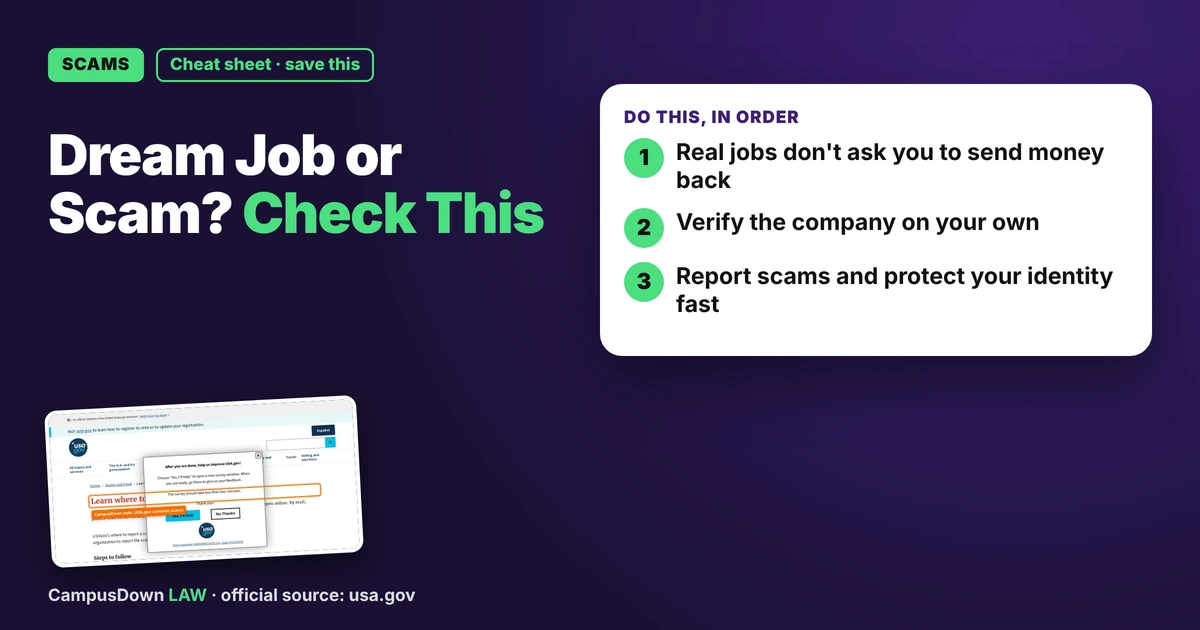
- Real jobs don't ask you to send money back.
- Verify the company on your own.
- Report scams and protect your identity fast.
General information, not legal advice. Rules vary by state and can change; check the official sources linked in this guide.
"Hi! We saw your resume. Remote data entry, flexible hours, great pay, no interview needed." My broke heart did a little dance. My brain said, wait. If you're Googling fake remote job offer for college students red flags, here's the checklist I wish I'd had.
Not a lawyer, just a student who gets more "job offers" than texts from crushes. General info only.
Classic red flags
USA.gov's common scams page covers job and employment scams among others. Patterns to watch for:
- An offer with no real interview, or an "interview" over text only
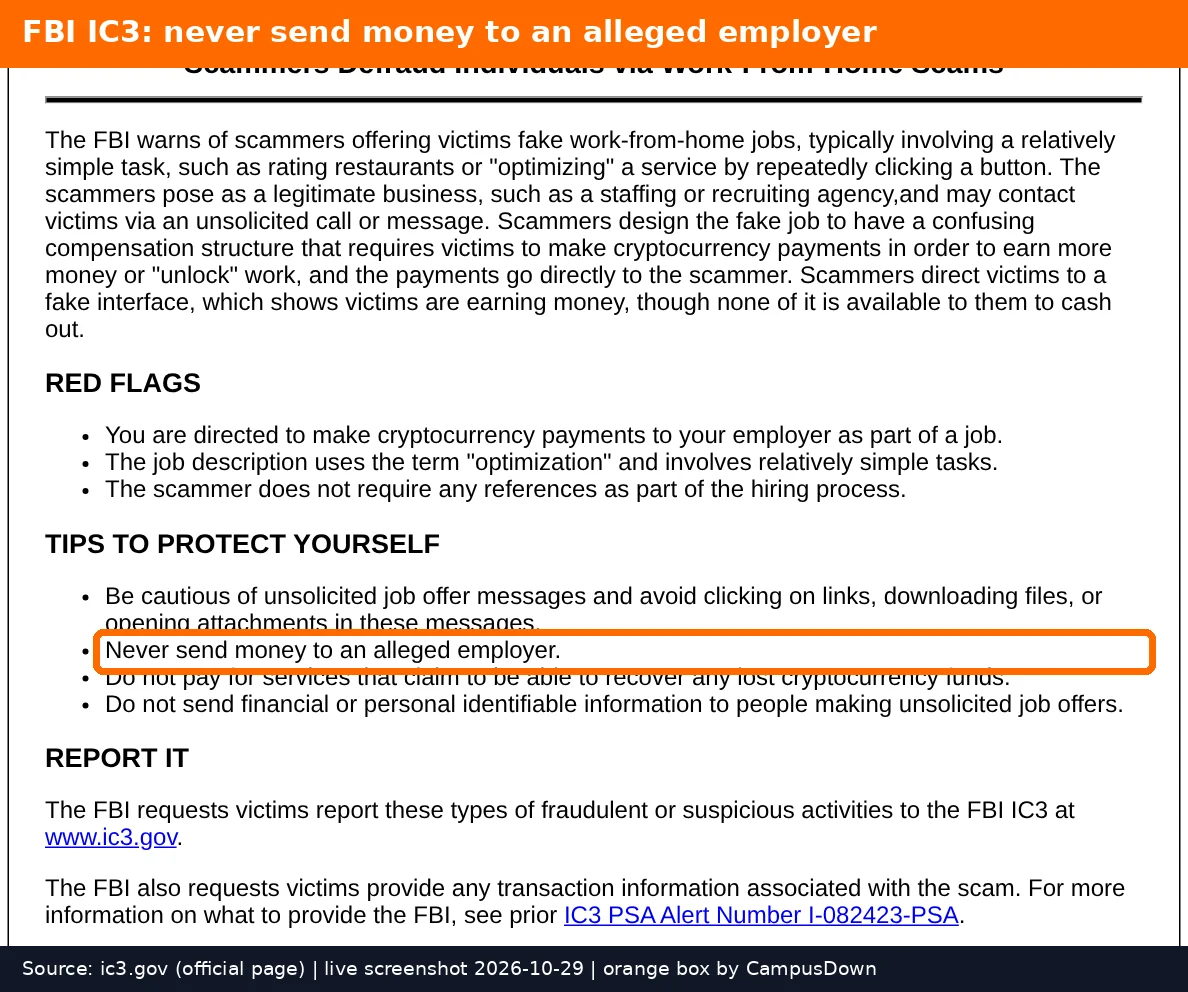
- They send you a check to buy equipment or gift cards, then ask you to send money back
- They ask for your bank login, or fees for training or "starter kits"
- Generic email addresses or a company with no real web presence
- Pressure to start immediately
The fake check move
This one gets students a lot. They mail or deposit a check, tell you to buy equipment from "their vendor," and send the rest back. The check can look like it cleared at first, then bounce days later. Then the money you sent is gone and you may owe the bank.
Your info is the target too
Some fake offers just want your Social Security number, ID photo and bank details for "onboarding." That can lead to identity theft. Real employers do need some info for payroll, but after a real hiring process, usually through verified systems.
Why scams work on smart people
They use urgency and flattery. Authority vibes from a fake logo trigger the halo effect. Being broke triggers scarcity mindset, which narrows focus. And optimism bias says "scams happen to other people."
How to check a job is real
Look up the company yourself. Find their careers page. Call using a number you find independently. Ask your campus career center. Search the job title plus "scam."
If you already got hit
Contact your bank right away. Report the scam through the options on USA.gov, and if your info was taken, follow identity theft recovery steps. It's not embarrassing. These are built to fool people.
Know someone stuck with a landlord or billing problem? Pass this along.
Pick an app — it just sends the link, nothing else.
Frequently Asked Questions
How can I tell if a remote job offer is fake?
Red flags include no real interview, requests to deposit checks and send money back, and fees for training or equipment.
Why do job scammers send checks?
Fake check scams make it look like money arrived so you send real money back before the check bounces.
What should I do if I gave a job scammer my info?
Contact your bank, report it and follow identity theft recovery steps.
Where do I report a fake job offer?
USA.gov lists places to report scams, and your campus career center may want to know too.