Credit Freeze vs. Fraud Alert: Which One Should a Student Use?
Credit freeze vs fraud alert: which is better for a student? Learn what each one does, how they affect new credit, and when to use them after a data breach.
“Nearly re-enrolled in English class while reading a lease.”
Theology · Scripture Cards
Open a scripture card
Already read and shared by 315 people.
 The Lord, He Is God
1 Kings 18:38-39
Then Yahweh’s fire fell and consumed the burnt offering, the wood, the stones, and the dust; and it licked up the water that was in the…
Read this card
 The Lord Is My Shepherd
Psalm 23:1, 4
Yahweh is my shepherd; I shall lack nothing. … Even though I walk through the valley of the shadow of death, I will fear no evil, for you…
Read this card
 Let There Be Light
Genesis 1:3-4
God said, “Let there be light,” and there was light. God saw the light, and saw that it was good. God divided the light from the darkness.
Read this card
 Surely I Will Be with You
Judges 6:16
Yahweh said to him, “Surely I will be with you, and you shall strike the Midianites as one man.”
Read this card
 Until He Finds It
Luke 15:4, 6
“Which of you men, if you had one hundred sheep and lost one of them, wouldn’t leave the ninety-nine in the wilderness and go after the one…
Read this card
 The Lord Will Provide
Genesis 22:14
Abraham called the name of that place “Yahweh Will Provide”. As it is said to this day, “On Yahweh’s mountain, it will be provided.”
Read this card
 The Sun of Righteousness
Malachi 4:2
But to you who fear my name shall the sun of righteousness arise with healing in its wings. You will go out and leap like calves of the…
Read this card
 Not My Will, but Yours
Luke 22:42
saying, “Father, if you are willing, remove this cup from me. Nevertheless, not my will, but yours, be done.”
Read this card
Key Takeaways
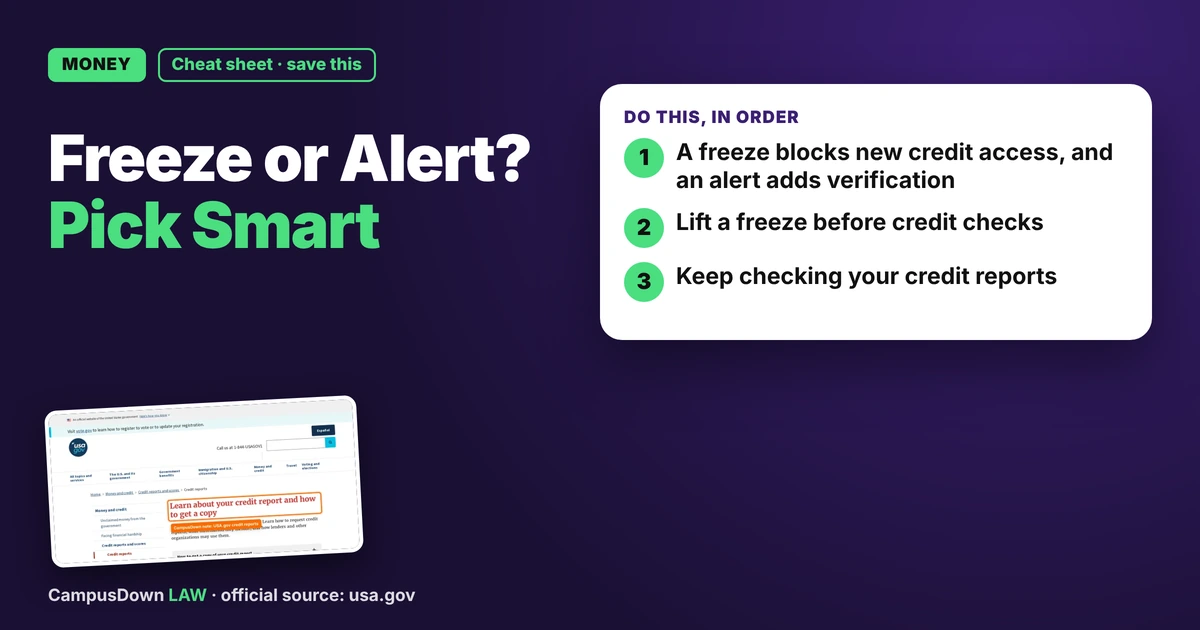
- A freeze blocks new credit access, and an alert adds verification.
- Lift a freeze before credit checks.
- Keep checking your credit reports.
General information, not legal advice. Rules vary by state and can change; check the official sources linked in this guide.
Got a "your data may have been exposed" email from some company you forgot you signed up for? Same. Now you're Googling credit freeze vs fraud alert which is better for students. Here's the simple version.
Not a lawyer or financial pro. General info only.
Credit freeze in one sentence
A credit freeze restricts access to your credit report, which makes it harder for someone to open new credit in your name. It's generally free, and you place it with each of the three major credit bureaus. You can lift it temporarily when you need to apply for something, like an apartment or a card.
Fraud alert in one sentence
A fraud alert tells businesses checking your credit to take extra steps to verify your identity before opening new credit. It doesn't block access. You usually place it with one bureau, which tells the others.
USA.gov's credit reports page explains both and links to the bureaus.
Which one for a student?
- Freeze* if you're not planning to apply for credit soon and want stronger protection. Just remember to lift it before apartment or job applications that check credit.
- Fraud alert* if you think you're at risk and want a lighter layer, or as a first step after a breach.
- Both* are possible. Some people do both after identity theft.
Check your reports too
A freeze stops new accounts, but you should still check your credit reports regularly for errors or accounts you don't recognize. Free reports are available through the official site listed by USA.gov.
Brain stuff
Optimism bias says "that breach won't affect me." Status quo bias keeps us from doing the 10-minute setup. And your credit score is something you'll rely on for years, so protecting it early is worth it.
Know someone stuck with a landlord or billing problem? Pass this along.
Pick an app — it just sends the link, nothing else.
Frequently Asked Questions
Does a credit freeze hurt my credit score?
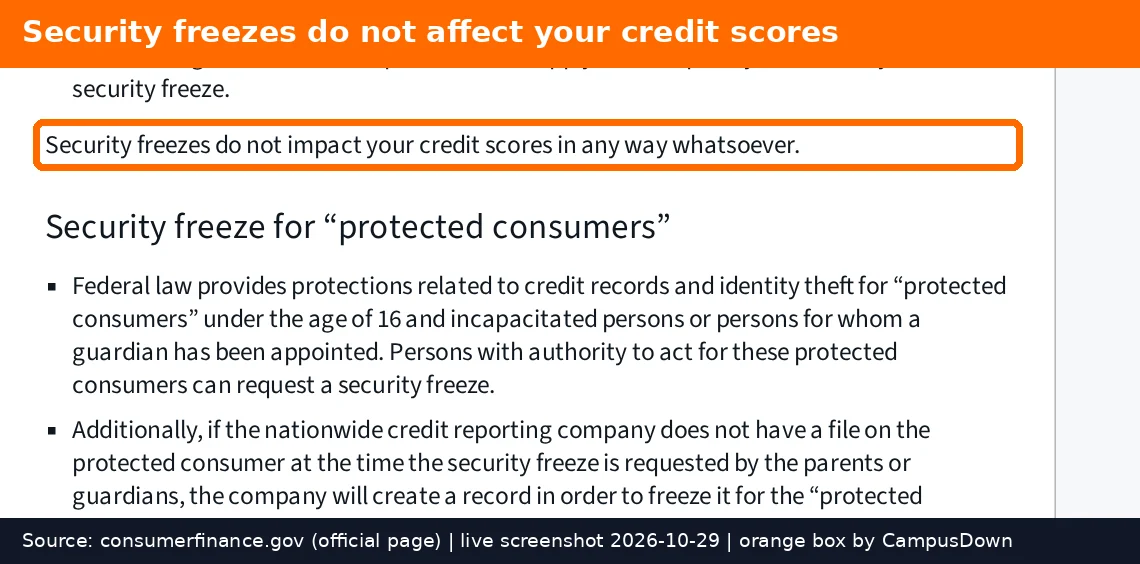
No, a freeze doesn't affect your credit score. It restricts access to your report. Not financial advice.
Is a credit freeze free?
Credit freezes are generally free with the major credit bureaus.
Can I apply for an apartment with a credit freeze?
You'll need to lift the freeze temporarily so the landlord can check your credit.
What's the difference between a fraud alert and a freeze?
A fraud alert asks businesses to verify your identity. A freeze restricts access to your report.