A $95 Annual Fee Just Hit My Credit Card and I Had No Clue
Surprise annual fee on your student credit card? A broke student's plain guide to card terms, asking for a waiver, downgrading, and when to complain.
“Nearly re-enrolled in English class while reading a lease.”
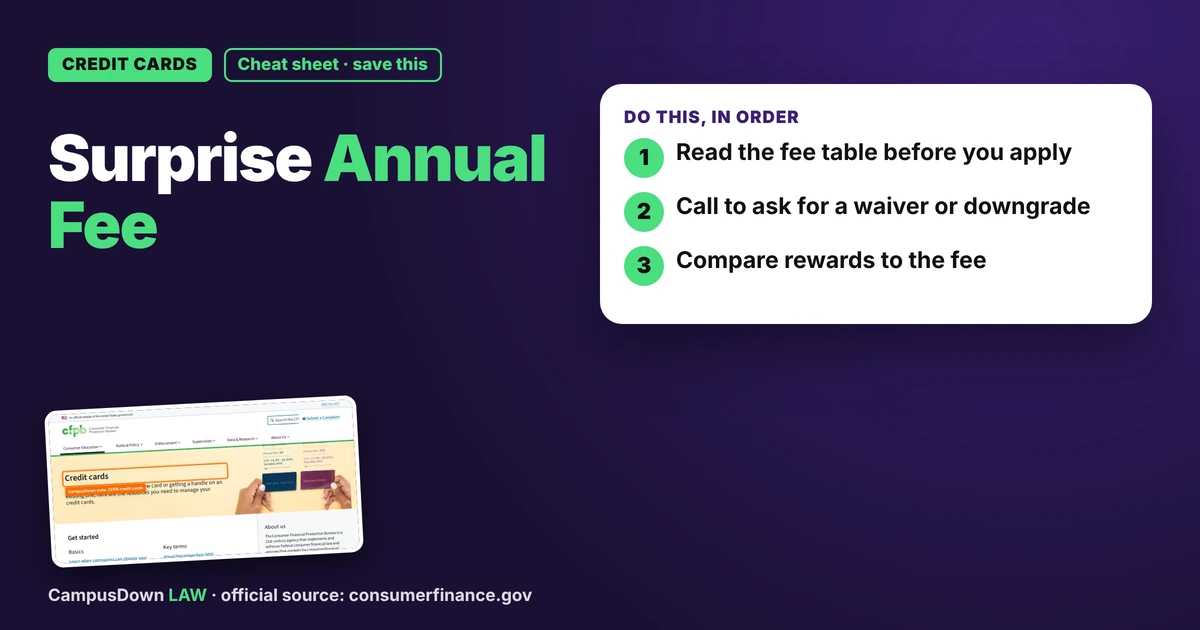
Key Takeaways
- Read the fee table before you apply.
- Call to ask for a waiver or downgrade.
- Compare rewards to the fee.
General information, not legal advice. Rules vary by state and can change; check the official sources linked in this guide.
I signed up for a credit card with a cool travel logo because I thought I'd look like a guy who goes places. One year later, a $95 annual fee appeared on my statement. For me, $95 is a week of food and a cheap movie night. I definitely didn't remember agreeing to that. So I searched my credit card charged an annual fee i didn't know about.
Quick disclaimer: I'm a student, not a financial advisor. Card terms vary, so check your own agreement and statements.
Where the fee should be disclosed
Credit card fees, including annual fees, are typically listed in the card's terms and in a summary box when you apply. The CFPB credit cards page explains card basics, including how to understand fees and your rights. If you're in the same spot, dig up your welcome email or card agreement; the fee is often sitting in a table nobody reads. The default effect of clicking "accept" without reading got me.
Call and ask nicely
You can call the card issuer and ask:
- Can you waive the annual fee this year?
- Is there a no-fee version of this card I can switch to?
- If I close the card, will the fee be refunded?
Closing vs keeping
Closing a card can affect your credit, depending on your situation. The wiki on hyperbolic discounting explains why we chase shiny short-term rewards and forget about long-term costs like annual fees. Before deciding, compare the rewards you actually used versus the fee.
If something seems wrong
If you believe you were never told about the fee, or the issuer won't explain, you can submit a complaint to the CFPB. The wiki on consumer protection law explains why disclosure rules exist.
My new rules
- Read fee tables before applying.
- Set a calendar reminder a month before card anniversaries.
- Only keep fee cards if the rewards beat the cost.
Next time I want to look like a world traveler, I'll just wear a nicer jacket on a date. Cheaper than a card fee.
Need a different letter for a related problem? The complaint letter templates hub has them all in one place, including a copy-paste consumer complaint letter.
Know someone stuck with a landlord or billing problem? Pass this along.
Pick an app — it just sends the link, nothing else.
Frequently Asked Questions
Can a credit card charge an annual fee?
Yes, if it's in the card terms. Check your agreement and disclosures.
Can I ask for a fee waiver?
Yes. Many issuers will consider waivers or downgrades.
Does closing a card hurt credit?
It can, depending on your credit profile.
Where can I complain?
You can submit a complaint to the CFPB.