A Debt Collector Is Calling About an Old Debt I Don't Recognize
Debt collector calling about an old debt you don't recognize? Learn how to ask for validation, why paying can matter, and how to spot a debt collection scam.
“Nearly re-enrolled in English class while reading a lease.”
Theology · Scripture Cards
Open a scripture card
Already read and shared by 315 people.
 The Rainbow Covenant
Genesis 9:13, 16
I set my rainbow in the cloud, and it will be a sign of a covenant between me and the earth. … The rainbow will be in the cloud. I will…
Read this card
 The Lord Will Fight for You
Exodus 14:13-14
Moses said to the people, “Don’t be afraid. Stand still, and see the salvation of Yahweh, which he will work for you today; for you will…
Read this card
 The Lord Will Provide
Genesis 22:14
Abraham called the name of that place “Yahweh Will Provide”. As it is said to this day, “On Yahweh’s mountain, it will be provided.”
Read this card
 He Revealed His Glory
John 2:11
This beginning of his signs Jesus did in Cana of Galilee, and revealed his glory; and his disciples believed in him.
Read this card
 Unto Us a Child Is Born
Isaiah 9:6
For a child is born to us. A son is given to us; and the government will be on his shoulders. His name will be called Wonderful Counselor…
Read this card
 The God Who Brought You Out
Exodus 20:2
“I am Yahweh your God, who brought you out of the land of Egypt, out of the house of bondage.
Read this card
 Hosanna to the Son of David
Matthew 21:9
The multitudes who went in front of him, and those who followed, kept shouting, “Hosanna to the son of David! Blessed is he who comes in…
Read this card
 This Is My Beloved Son
Matthew 3:16-17
Jesus, when he was baptized, went up directly from the water: and behold, the heavens were opened to him. He saw the Spirit of God…
Read this card
Key Takeaways
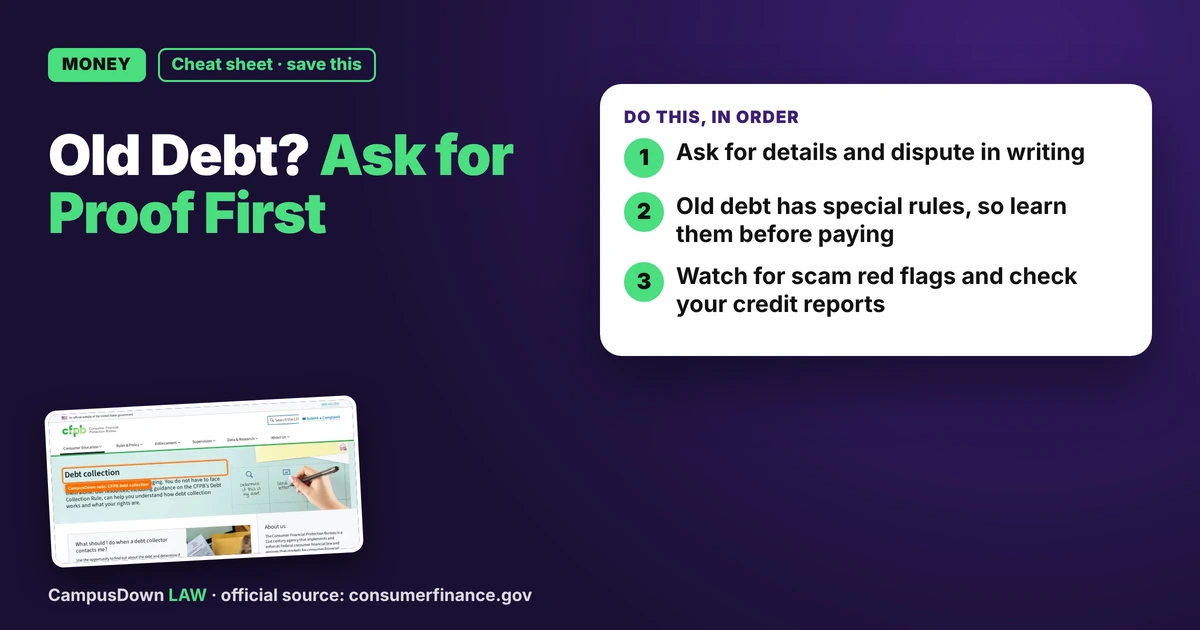
- Ask for details and dispute in writing.
- Old debt has special rules, so learn them before paying.
- Watch for scam red flags and check your credit reports.
General information, not legal advice. Rules vary by state and can change; check the official sources linked in this guide.
Random number. You pick up (mistake). Someone says you owe money from an account you've never heard of, from years ago, and they need payment today. If you're searching debt collector calling about old debt I don't recognize, don't pay anything yet.
I'm not a lawyer. General info, and some rules depend on your state.
Ask for the details first
The CFPB's debt collection page explains your rights when a collector contacts you. Collectors generally have to give you information about the debt, and you can dispute it. Ask for:
- The name of the original creditor
- The amount and how it was calculated
- Who currently owns the debt
Write down the caller's name, company, phone number and the date.
Dispute in writing
If you don't recognize it, dispute it in writing and ask for verification. The CFPB has sample letters you can adapt. Keep copies. Don't give bank info or your full Social Security number to a caller you can't verify.
Old debt can be tricky
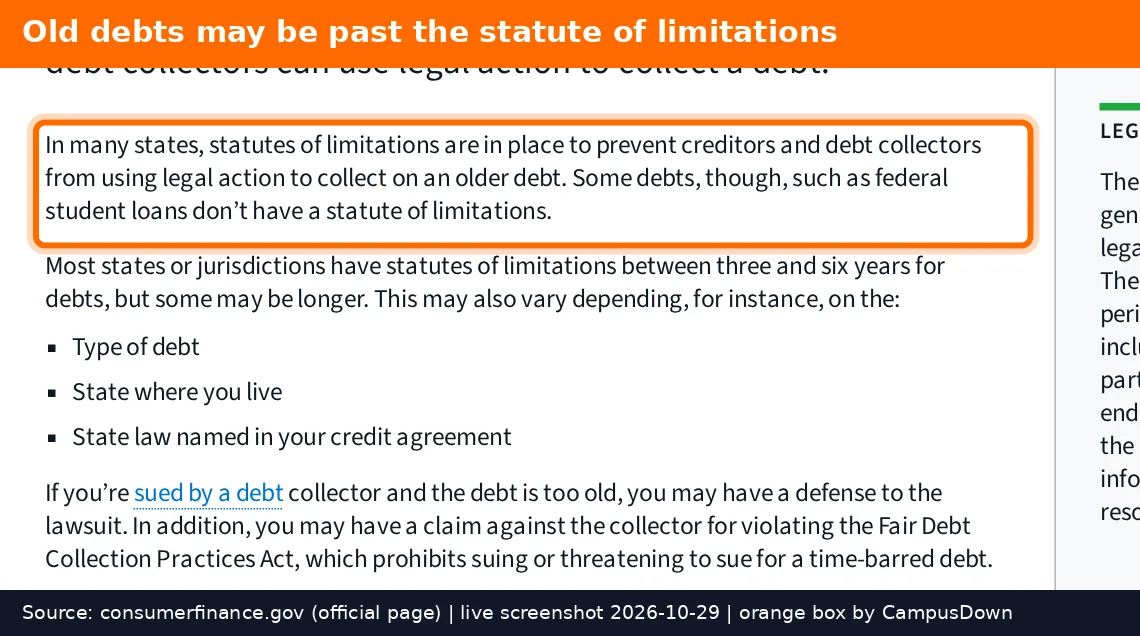
Each state has a time limit for suing over many debts, often called a statute of limitations. Very old debt might be past that limit, but it can still be reported or collected in some ways depending on the rules. In some situations, making a payment or acknowledging the debt could affect your rights, so learn your options before paying. This is exactly the kind of thing worth asking legal aid about.
Is it even real?
Scammers pretend to be collectors. Red flags: threats of arrest, demands for gift cards or payment apps, refusing to give info in writing. It's social engineering wrapped in fear, and knowing basic consumer protection law helps you spot it. Real collectors still have rules to follow.
It might also be identity theft: someone opened something in your name. Check your free credit reports. If you see accounts you didn't open, report it.
Why our brains want to pay fast
Loss aversion makes the threat of a bigger loss feel huge, so paying a smaller amount now feels "safe." And the ostrich effect makes some people ignore it completely. Neither is great. Ask questions and get it in writing.
If you get sued over a debt, don't ignore court papers. Show up or respond, and get help from legal aid.
Legal stuff is easier with a friend. Send this to someone who could use it.
Pick an app — it just sends the link, nothing else.
Frequently Asked Questions
Do I have to pay a debt I don't recognize?
Ask for information and dispute it in writing first. Don't pay until you know it's valid. Not legal advice.
Can a debt be too old to collect?
States have time limits for suing on many debts, but rules are complicated. Ask legal aid before paying old debt.
How do I know if a debt collector is a scam?
Threats of arrest, demands for gift cards and refusal to give written info are red flags.
What if I get sued over a debt?
Don't ignore it. Respond by the deadline and get legal help.